


The Wisdom of a Two-Year Life
Some plants are easily overlooked until they flower.
Mullein is not one of them.
Even in its first year, when it grows close to the ground, its broad silver-green leaves are difficult to pass without touching. They are thick, soft, and densely covered in fine hairs, forming a low rosette that looks almost out of place on the hard, exposed ground where the plant so often appears.
The following year, Mullein changes completely.
From the centre of the rosette rises a tall, sturdy stalk, sometimes reaching well above a person’s head. Small yellow flowers open gradually along its length, each one lasting only a short time before another takes its place.
It is an unusual life: one year spent close to the earth, followed by a single season of astonishing height.
Mullein often grows where the soil has been disturbed—along roadsides, on gravel banks, at the edges of fields, and in places recently cleared or burned. It does not compete particularly well with established vegetation. Instead, it waits in the soil until an opening appears.
Its tiny seeds may remain dormant for decades, preserving the possibility of an entire plant long after the original flower stalk has disappeared. When the soil is exposed and light reaches the surface again, Mullein returns.
Botanical Profile
Botanical name: Verbascum thapsus L.
Common names: Common Mullein, Great Mullein, Woolly Mullein, Flannel Leaf, Velvet Dock, Candlewick Plant
Family: Scrophulariaceae
Life cycle: Usually biennial
Parts used: Leaves, flowers, roots; occasionally the seeds in historical practice
Native range: Europe, northern Africa, and western and central Asia
Current range: Naturalized widely throughout North America, Australia, and other temperate regions
Habitat: Dry, sunny, disturbed ground; roadsides, gravelly fields, open banks, forest clearings, and recently burned areas
Energetics: Cooling to neutral, moistening, soothing, relaxing
Mullein is generally a biennial. During its first year, it forms a basal rosette of large, pale green leaves covered in dense, woolly hairs. In its second year, it sends up a tall flowering stem bearing clusters of small yellow flowers.
Each flower opens for approximately one day, usually beginning before dawn and closing later in the afternoon. The flowers open gradually rather than all at once, allowing the plant to bloom over an extended period. Bees are among its most effective pollinators, although the flowers are also capable of self-pollination when insect visits are limited.
Once flowering and seed production are complete, the plant usually dies. Its dry stalk often remains standing through winter, holding hundreds of seed capsules filled with minute seeds.
A single Mullein plant may produce well over 100,000 seeds. These seeds generally fall close to the parent plant but can remain viable in the soil for many decades. Historic seed-bank experiments have demonstrated the extraordinary longevity of some Verbascum seeds.
Botanical Relatives & Species
The genus Verbascum contains several hundred species, centred primarily in Europe, Asia, and the Mediterranean region. Although Verbascum thapsus is the species most commonly associated with Western herbal medicine, several closely related species have also been used traditionally.
These include:
-
Verbascum densiflorum — Dense-Flowered Mullein
-
Verbascum phlomoides — Orange Mullein or Clasping Mullein
-
Verbascum blattaria — Moth Mullein
-
Verbascum sinuatum — Wavy-Leaf Mullein
-
Verbascum nigrum — Dark Mullein
European herbal preparations frequently use the flowers of V. thapsus, V. densiflorum, or V. phlomoides. The species are related but not chemically identical, making correct botanical identification important when purchasing or harvesting medicinal material.
Ornamental garden Verbascums may be hybrids selected for flower colour and form. They should not automatically be treated as interchangeable with medicinal Mullein.
Historical Roots
Mullein has followed human disturbance for centuries.
Where land was cleared, roads were cut, fields were abandoned, or fires opened the soil to sunlight, Mullein frequently appeared. Its preference for exposed ground made it a familiar plant around settlements, farms, pathways, and cultivated landscapes.
The plant’s many common names reveal how closely people once knew it.
Its soft leaves inspired names such as Flannel Leaf, Velvet Dock, Beggar’s Blanket, Adam’s Flannel, and Hare’s Beard. Its tall, dried stalk was dipped in wax, tallow, or resin and used as a torch or candlewick, giving rise to names such as Candlewick Plant and Hag’s Taper.
Classical and early European herbalists described Mullein for respiratory complaints, pain, swelling, wounds, and disorders of the ears and throat. Dioscorides, Pliny, John Gerard, and Nicholas Culpeper all recorded uses for plants believed to belong to the Verbascum genus.
Its flowers were infused into oil for ear discomfort. Leaves were prepared as teas, poultices, or fomentations. The roots were used less commonly but appeared in traditional preparations for pain, cramps, and urinary concerns.
Mullein was later carried beyond its native range and became widely established across North America. Indigenous peoples developed their own uses for the introduced plant, particularly for respiratory concerns, topical preparations, and practical household purposes.
The historical use of Mullein is remarkably broad, but one theme appears repeatedly across cultures: the plant was chosen whenever tissue felt irritated, inflamed, dry, tight, or difficult to clear.
Traditional Uses
Mullein is best known as an herb for the respiratory system.
Its leaves and flowers have traditionally been used for dry coughs, irritated throats, lingering congestion, bronchial discomfort, and respiratory conditions in which the lungs feel both inflamed and burdened with mucus.
This combination is important.
Mullein is commonly described as both an expectorant and a demulcent. Expectorant herbs encourage the movement and elimination of mucus, while demulcent herbs soothe dry or irritated tissue.
Many respiratory herbs lean strongly in one direction. They either stimulate the removal of congestion or soothe irritation. Mullein has traditionally been valued because it appears to do both.
It is particularly suited to coughs that are dry, unproductive, or exhausting, as well as situations where mucus is present but difficult to move. Rather than acting as a harsh stimulant, it is generally considered a gentle respiratory tonic that may be used over longer periods.
Traditional herbalists have also used Mullein for:
-
sore or irritated throats
-
hoarseness
-
bronchial congestion
-
swollen lymphatic tissue
-
inflamed skin
-
wounds and minor burns
-
muscular and joint discomfort
-
ear discomfort
-
urinary irritation
-
nerve pain and spinal discomfort
The use of Mullein root for the spine, joints, urinary system, and structural alignment has become increasingly popular among contemporary Western herbalists. These applications are based primarily on traditional practice and modern clinical observation rather than strong human clinical trials.
They are intriguing, but they should be presented honestly as areas where herbal practice currently extends beyond the available research.
What This Plant Brings
Mullein brings softness where there is irritation and movement where there is stagnation.
In respiratory formulas, it is often chosen when the tissues are dry, inflamed, or exhausted but congestion still needs to be cleared. It does not simply suppress a cough. Traditionally, it helps make the cough more effective while soothing the strain created by repeated coughing.
The leaves reflect this dual nature.
They are soft enough to appear delicate, yet the plant grows in dry, exposed places where many softer-looking herbs would struggle. The dense hairs that make the leaves feel like felt also help protect the plant from heat, sunlight, and moisture loss.
Mullein is not fragile.
Its softness is part of its resilience.
Aromatic Profile
Mullein is not considered an aromatic herb in the same sense as Lavender, Rosemary, or Thyme. It does not produce a commonly used essential oil, and its medicinal qualities arise primarily from non-volatile constituents found in the leaves, flowers, and roots.
The dried leaves have a mild, green, slightly sweet scent. The flowers are more delicate, with a faint honeyed quality that becomes especially noticeable when they are gathered fresh.
Mullein flower oil is not an essential oil. It is an infused oil made by steeping the fresh or carefully wilted flowers in a carrier oil. It has traditionally been used externally around the ears, lymphatic tissue, and areas of minor inflammation.
Because the flowers contain moisture, the infused oil must be prepared carefully to reduce the risk of spoilage.
Primary Constituents & Their Significance
Mullein contains a broad range of plant compounds, including mucilage, saponins, iridoid glycosides, phenylethanoid glycosides, flavonoids, tannins, and other polyphenolic compounds. Reviews of Verbascum thapsus also identify constituents such as aucubin, verbascoside, hesperidin, and various phenolic acids.
Mucilage
Mucilage is a water-soluble polysaccharide that becomes slippery and soothing when combined with water.
It helps explain Mullein’s traditional use for dry, irritated mucous membranes, particularly in the throat and respiratory tract. Mucilage is best extracted in water, making teas and infusions especially appropriate preparations.
Saponins
Saponins are compounds traditionally associated with expectorant activity.
They may help loosen and mobilize mucus, contributing to Mullein’s reputation for making a dry or unproductive cough more effective.
This creates one of the plant’s most interesting combinations: mucilage soothes irritated tissue while saponins encourage movement.
Iridoid Glycosides
Iridoids such as aucubin are associated with anti-inflammatory and antimicrobial activity in experimental research.
Aucubin occurs in many plants traditionally used for inflamed, irritated, or damaged tissue. Its presence may contribute to Mullein’s historical use for wounds, respiratory irritation, and topical inflammation.
Verbascoside
Verbascoside, also known as acteoside, is a phenylethanoid glycoside found throughout the Verbascum genus.
Laboratory research has associated it with antioxidant, anti-inflammatory, and antimicrobial activity. These findings are promising but do not establish the effectiveness of whole Mullein preparations for treating specific diseases in humans.
Flavonoids
Flavonoids contribute antioxidant and anti-inflammatory activity and may help protect tissues from oxidative stress.
Hesperidin and related flavonoids have been identified in V. thapsus, although the concentration varies according to plant part, extraction method, geography, and growing conditions.
Tannins
Tannins are astringent compounds that tighten and tone tissue.
Their presence may appear contradictory in a softening plant, yet Mullein’s overall action comes from the relationship between many constituents rather than from one isolated chemical. The tannins may contribute to its traditional topical use for minor wounds and weeping tissue, while the mucilage moderates excessive dryness.
As with essential oils, medicinal herbs are not chemically static. Soil, climate, plant age, harvest timing, geography, and preparation method may all influence which constituents are present and in what concentration.
Blending Partners
Mullein combines particularly well with herbs that complement its gentle, moistening, and expectorant qualities.
For dry, irritated coughs:
-
Marshmallow root
-
Licorice root
-
Plantain leaf
-
Slippery Elm
-
Violet leaf
For thick or difficult congestion:
-
Elecampane root
-
Thyme
-
Hyssop
-
Horehound
-
Ginger
For sore throats:
-
Marshmallow root
-
Licorice root
-
Sage
-
Calendula
-
Rose
For lymphatic congestion around the throat and ears:
-
Calendula
-
Cleavers
-
Red Clover
-
Violet
-
Echinacea
For external muscular or joint preparations:
-
St. John’s Wort
-
Arnica
-
Cottonwood bud
-
Comfrey leaf
-
Lavender
Mullein’s mild flavour and gentle action allow it to soften stronger, more bitter, or stimulating respiratory herbs.
Modern Research
Modern research on Mullein is promising but still limited.
Much of the available evidence consists of laboratory studies, animal studies, ethnobotanical reviews, and phytochemical investigations. There are relatively few well-designed human clinical trials, particularly for the respiratory uses for which Mullein is best known.
Laboratory studies have reported antibacterial, antiviral, antioxidant, anti-inflammatory, analgesic, relaxant, and antifungal activity in extracts of Verbascum thapsus. However, the extraction methods and concentrations used in these studies do not always correspond to a traditional cup of Mullein tea.
Experimental research has also identified relaxant activity in Mullein preparations, providing a possible basis for the plant’s traditional use in spasmodic coughs and muscular tension. One study found antispasmodic effects in isolated tissue models, although this does not yet establish a clinical respiratory benefit in humans.
A clinical study involving a topical Verbascum thapsus cream reported improved healing of episiotomy wounds compared with the control treatment. The authors noted that additional studies are required before the findings can be considered conclusive.
Research into different Verbascum species also supports the presence of compounds with potential anti-inflammatory activity, aligning with their widespread traditional use for inflamed tissue. Yet species, plant parts, and preparations vary considerably across studies, making broad claims about Mullein difficult.
The research currently supports Mullein as a chemically active plant worthy of further investigation. It does not yet provide strong clinical proof for many of its traditional applications.
For now, its respiratory reputation rests primarily on centuries of traditional use, phytochemical plausibility, and the accumulated clinical experience of herbalists.
Practical Applications
Mullein Leaf Tea
Mullein leaf tea is one of the simplest ways to use the plant.
Place one to two teaspoons of dried, crumbled leaf in a cup and cover with hot water. Steep for approximately fifteen minutes, then strain exceptionally well through a coffee filter, several layers of fine cloth, or another very fine filter.
The hairs on the leaves can irritate the throat if they remain in the tea.
For a more soothing preparation, Mullein may be combined with Marshmallow root or Licorice root. For stubborn congestion, it can be blended with Thyme or Elecampane.
Cold Infusion
Because mucilage extracts well in cool water, Mullein can also be prepared as a cold infusion.
Place dried leaf in cool water and allow it to steep for several hours or overnight. Strain thoroughly before drinking.
A cold infusion emphasizes the plant’s moistening qualities and may be preferable when dryness and irritation are more prominent than heavy congestion.
Mullein Flower Oil
Fresh Mullein flowers may be infused into a carrier oil for external use.
The flowers are gathered individually as they open, allowed to wilt briefly to reduce surface moisture, and then covered completely with oil. Because fresh flowers contain water, the infusion should be watched carefully for signs of fermentation, mould, or spoilage.
Mullein flower oil has traditionally been applied around the outer ear and along nearby lymphatic tissue.
It should never be placed into an ear when a ruptured eardrum is suspected, when tubes are present, or when there is unexplained discharge, severe pain, fever, or possible infection. These situations require medical assessment.
Poultice or Compress
Mullein leaves may be softened in hot water and applied externally as a poultice over minor inflammation, sore muscles, or swollen tissue.
The leaf hairs may irritate sensitive skin, so placing the herb between layers of cloth is often more comfortable.
Tincture
Mullein leaf, flower, or root may be prepared as a tincture.
Leaf and flower tinctures are generally used for respiratory or lymphatic applications, while root tinctures are more often chosen by contemporary herbalists for back pain, structural discomfort, urinary issues, or nerve-related pain.
These root applications are based largely on herbal tradition and practitioner experience.
Growing & Harvesting
Mullein prefers full sun and open, well-drained soil.
It is particularly well adapted to dry, sandy, gravelly, or disturbed ground where competition from other plants is limited. In rich garden soil, it may grow impressively large, but it does not require fertility to establish.
Seeds should be scattered on the soil surface rather than buried deeply. Light is an important germination cue, and the tiny seeds require close contact with bare soil.
In its first year, the plant forms a low rosette.
Leaves may be harvested during this stage or early in the second year before the flower stalk is fully developed. Choose clean, healthy leaves from plants growing well away from roadsides, sprayed areas, industrial sites, and contaminated ground.
The leaves are thick and can retain moisture. They should be dried in a single layer with good airflow and turned regularly. Complete drying is essential to prevent mould.
Flowers are gathered individually as they open, often in the morning after the dew has dried. Since only a small number of flowers may open on any one day, harvesting them requires repeated visits over several weeks.
The root is generally harvested from first-year plants in autumn or from second-year plants in early spring before the flower stalk rises.
Mullein produces an extraordinary amount of seed and can spread readily in exposed ground. In regions where it is considered invasive or ecologically disruptive, flower stalks should be cut before seed maturation.
In the Apothecary
Mullein is an herb worth keeping simple.
Its leaves make a dependable addition to respiratory teas, particularly when coughing has left the throat and chest feeling dry, raw, or overworked. It can soften stronger herbs without making a formula feel weak.
The flowers require patience.
Only a handful may be ready on any given morning, and gathering enough for an infused oil can take weeks. This makes Mullein flower oil a genuinely seasonal preparation—one built a few blossoms at a time.
The root belongs to a different tradition within the plant.
Although it is less familiar than the leaves and flowers, modern herbalists increasingly use it in formulas for the lower back, joints, urinary tract, and structural discomfort. These uses remain less thoroughly researched, but they remind us that a medicinal plant is rarely limited to the part that became commercially popular.
Each part of Mullein has its own character.
The leaves soothe and help clear.
The flowers soften.
The root anchors.
Common Preparations
-
Hot leaf infusion
-
Cold leaf infusion
-
Leaf tincture
-
Flower tincture
-
Root tincture
-
Fresh flower-infused oil
-
Poultice
-
Compress
-
Herbal steam blends
-
Syrups and respiratory formulas
Smoking Mullein has a long history in folk practice, and the dried leaf is still included in some herbal smoking blends. Although it does not contain nicotine, inhaling smoke of any kind exposes the lungs to irritants and combustion products.
For respiratory care, tea, tincture, syrup, or steam preparations are generally more appropriate.
Safety Considerations
Mullein is generally considered a gentle herb when properly prepared.
The most important practical concern is the dense layer of fine hairs covering the leaves. These hairs can irritate the mouth and throat and must be removed through very careful filtering.
Some people may also experience skin irritation when handling the fresh or dried leaves.
Mullein flower oil should not be placed into the ear when:
-
a ruptured eardrum is possible
-
ear tubes are present
-
there is fluid or blood draining from the ear
-
severe pain or fever is present
-
the cause of the discomfort is unknown
Ear pain, particularly in children, should be properly assessed.
Reliable safety data during pregnancy and breastfeeding are limited. Food-like quantities in tea may be considered differently from concentrated tinctures or extracts, but professional guidance is appropriate.
The seeds should not be used internally. They have a history of use as fish stupefying agents and contain compounds not appropriate for casual medicinal use.
Persistent cough, chest pain, shortness of breath, wheezing, high fever, coughing blood, or symptoms that worsen rather than improve require medical care. Mullein should not be used to delay diagnosis or treatment of pneumonia, asthma, chronic obstructive pulmonary disease, or other serious respiratory conditions.
Final Thoughts
By the end of its second summer, Mullein has given almost everything to a single stalk.
The soft rosette disappears beneath it. The yellow flowers open and close. Thousands of seeds form inside small capsules along the stem.
Then the plant dries.
The stalk may remain standing long after the leaves and flowers are gone, while its seeds settle into the soil below. Most will not germinate immediately. Some may wait for years, held beneath roots, grasses, and fallen leaves.
Mullein does not need permanent possession of the ground.
It needs an opening.
Featured products
-
Breathe Mullein Mint & Ginger Herbal Tea
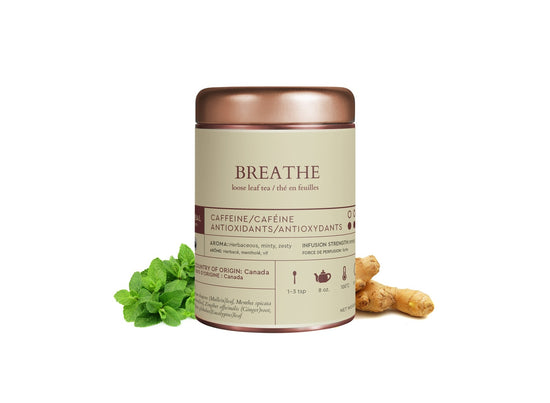 Breathe Mullein Mint & Ginger Herbal Tea
- Regular price
-
$0.40 CAD $24.00 CAD - Regular price
-
- Sale price
-
$0.40 CAD $24.00 CAD
